Walk down Water Street on the third weekend of September and you will hear some version of the same story. A parent points toward the lake, tells a kid that a carousel used to spin right about there, that this whole stretch of shoreline was once an amusement park with a roller coaster and a dance hall where famous bands played. It is a good story. It is also not quite the one that actually happened, and knowing the difference changes how you spend the weekend.
Excelsior Apple Days runs September 18 through 20 this year, with the main grounds at 12 Water Street along the lake's edge. The festival's own program includes a Historic Water Street Walking Tour departing at 11 a.m., built around the town's origins as a steamboat landing in the 1800s. It is a genuinely good tour. But the tour covers the 1800s, not the 1900s, and the bigger local legend, the amusement park era, tends to get passed around informally rather than accurately. Here is what actually happened to it.
The Park That Used to Sit Right Here
Excelsior Amusement Park opened on Excelsior Bay on May 30, 1925, founded by Fred W. Pearce. For 48 summers, running each year between Memorial Day and Labor Day, it was a genuine Twin Cities destination, pulling in company picnics and day trips by streetcar until that rail line closed in 1932, and by car after that. The park hit its peak in the 1940s and 1950s. It closed for good at the end of the 1973 season, done in less by fading popularity than by a 5.5-acre footprint that left no room to add anything new as tastes changed.
That part of the story tracks with what most longtime residents remember. Where it gets fuzzy is what happened to the park's most photographed feature.
What Actually Happened to the Rides
The carousel, built by the Philadelphia Toboggan Company and in continuous service for the entire life of the park, did not stay in Excelsior. It was preserved and relocated, and it still runs today, just not here. It operates at Valleyfair in Shakopee, an hour south. A second ride, the Scrambler, was also saved from demolition when the park closed.
The Cyclone, the park's wooden roller coaster and its other signature attraction, was not so lucky. It was demolished in 1973 along with the rest of the site. A persistent local belief holds that the Cyclone was rebuilt at Valleyfair as the High Roller. It was not. Valleyfair's High Roller was built to resemble the old Cyclone, but it is a different structure entirely.
If you want to sit where Excelsior families sat for 48 summers, you can, on the actual carousel horses. You just have to drive to Shakopee to do it.
Why the Myth Persists
Part of the reason the amusement park still looms so large in Excelsior's identity has less to do with rides and more to do with what happened on the dance floor. Danceland, the ballroom on the same grounds, hosted a run of major acts through the 1930s, 40s, 50s and into the 60s, including Lawrence Welk, Tommy Dorsey, and the Beach Boys. In June 1964, the Rolling Stones played there too, and the visit has become local legend for a different reason: a chance encounter with a local character named Jimmy Hutmaker reportedly inspired the title of one of the band's best known songs.
Danceland's run ended less gracefully than the park's. The city council suspended the ballroom's license in 1966 over crowd disturbances, and owner Ray Colihan closed it the following year. The empty building sat until vandals burned it down in the summer of 1973, the same year the rest of the park shut its gates.
Given how much cultural weight the ballroom carries, it is not surprising that the story of the amusement park gets compressed in memory. The music history is real and worth repeating exactly as it happened. The ride history just needs a small correction: the carousel found a new home, the Cyclone did not survive at all, and neither one is sitting quietly somewhere in Excelsior waiting to be rediscovered.
What Apple Days Actually Delivers This Year
None of this makes the 2026 festival less worth attending. It just means the "history" on offer this weekend is the steamboat-era history covered on the walking tour, not the amusement-park era that lives mostly in conversation.
The weekend itself, presented this year by Youngstedts, opens at 10 a.m. with vendors lining Water Street, the beer and wine garden setting up at the center of the grounds, and the Happy Apple Kids Corner opening for younger visitors. The Apple Pie contest runs as both a baking competition and a pie-eating contest and draws some of the most devoted home bakers in the area. Paradise Charter Cruises offers complimentary community cruises during the festival, a genuine way to see the same waterfront the old park once occupied, from the water itself. A single main stage carries live music through the day, moving from folk and acoustic sets toward full-band acts, and the weekend closes the way it always has, with a street dance, an increasingly rare tradition that Excelsior has kept going since 1935.
The apples themselves come from the Gilchrist family, Steve and Tami, who run their orchard out of Buffalo, Minnesota and supply the festival each year. It is a small detail, but it means the apple in your hand at Apple Days traces back to a specific farm and a specific family, not a wholesale supplier.
Where to eat within walking distance of the festival grounds:
- Maynard's Restaurant (685 Excelsior Blvd), open since 1947, with a water-facing dining room and a full-service bar. The walleye and other Minnesota fish specials are the reason generations of locals keep coming back.
- Lolas on Lake Minnetonka (294 Water St), positioned almost directly on the festival grounds, with a lakefront patio lunch menu of salads and sandwiches suited to moving between festival activities.
- Sunsets Restaurant (700 Excelsior Blvd), a broader dinner menu and lake views for after the festival winds down. The patio fills quickly on festival weekends, so a reservation ahead of time is worth the effort.
What's Actually Still Here
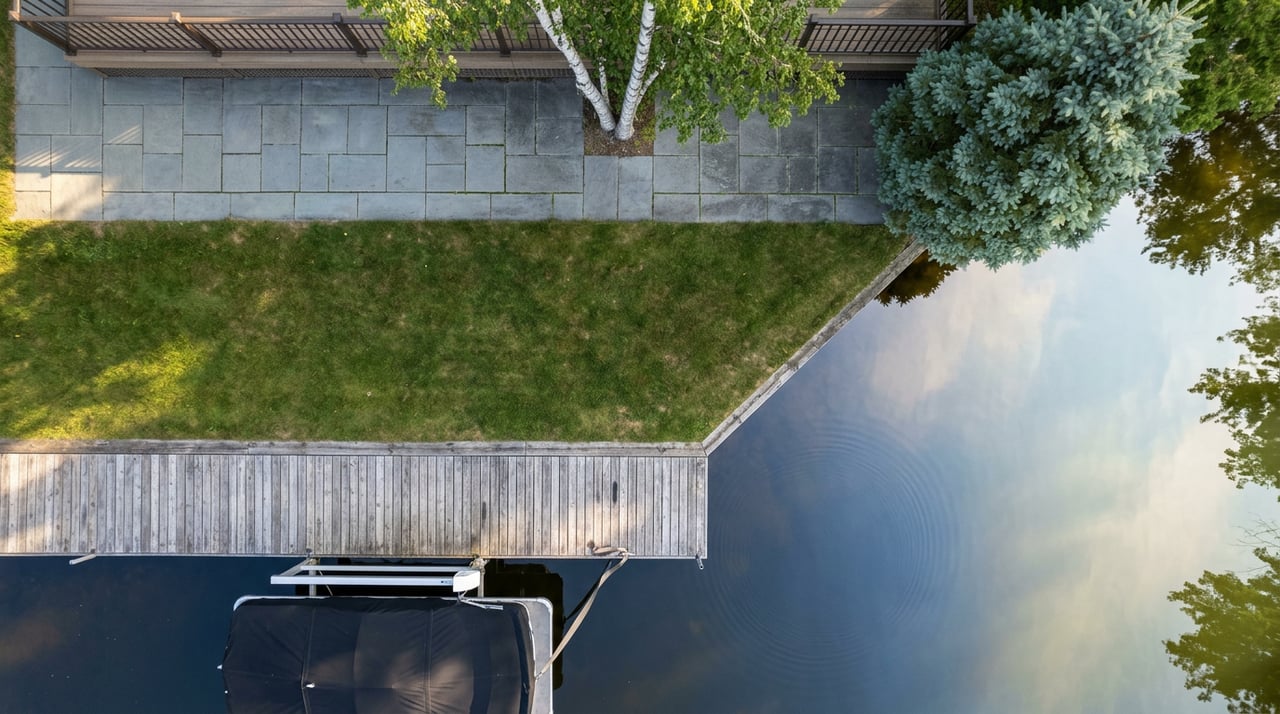
The physical amusement park is gone, its most famous ride running under Shakopee's sky instead of Excelsior's. But the shape of the town that grew up around it never left. Excelsior Bay remains one of the calmer, more sheltered entry points on Lake Minnetonka, an easy walk from the festival grounds and still a place families use to get their kids on the water for the first time. The commercial strip running parallel to the festival grounds still functions the way it always has, letting you move between vendor booths, the shoreline, and the small businesses lining Water Street without ever really leaving the festival. For a second day of activity with younger kids, the Minnesota Landscape Arboretum in nearby Chaska, about eight miles east, offers 1,200 acres of a slower pace than a festival crowd allows.
What survived the amusement park's closing was not a ride you can still climb onto here. It was a town built around walkable blocks and open water, the same qualities that keep filling those blocks every third weekend in September, more than fifty years after the carousel packed up and moved south.
If Apple Days has you thinking about what it would actually mean to live inside walking distance of Water Street year round, not just for one weekend in September, Polovitz Group knows this stretch of Lake Minnetonka block by block, dock by dock. Reach out when you are ready to talk about what living here actually looks like, not just visiting.